
Choosing between honed vs polished marble is a big decision for your home renovation. After all, who doesn’t want their marble countertop to look great and last a long time?
Many homeowners get stuck on this choice because they do not know which finish works for their specific needs. It changes the whole look of a room. It also changes how you take care of the surface.
Cosmos Marble and Granite is here to help you figure it out. Let’s look at the differences closely and learn about the style of each finish. We will cover maintenance needs, too. Then you can pick the right one for your floors or counters.
Key Takeaways
- Honed marble offers a softer, matte finish, making it ideal for homeowners who prefer a natural, understated look in kitchens and bathrooms.
- Polished marble provides a glossy, high-shine surface, perfect for spaces where you want a bright, luxurious, and elegant aesthetic.
- Honed marble hides scratches and etching better, making it a practical choice for high-traffic areas.
- Polished marble is more stain-resistant, thanks to its sealed, reflective surface.
- Your lifestyle and maintenance preferences should guide your decision, as each finish behaves differently with daily use.
- Visiting a local showroom in Metro Philadelphia—like Cosmos Marble & Granite in Huntingdon Valley—helps you compare both finishes in person before committing.
What Does “Finish” Actually Mean?
A finish is simply the final step in the stone manufacturing process. The factory treats the surface of the stone slab. They do this to achieve a certain texture. They also do it to get a specific look. The stone itself is the same. The difference comes from how much they sand the surface.
Workers stop the sanding process early for one type. This leaves the stone with a matte look. They sand it much longer for the other type. This creates a high shine. It feels very smooth to the touch. The grinding process changes the pores of the stone too. This affects how the marble reacts to water. It also affects how it reacts to stains.
The Shiny Appeal of Polished Marble
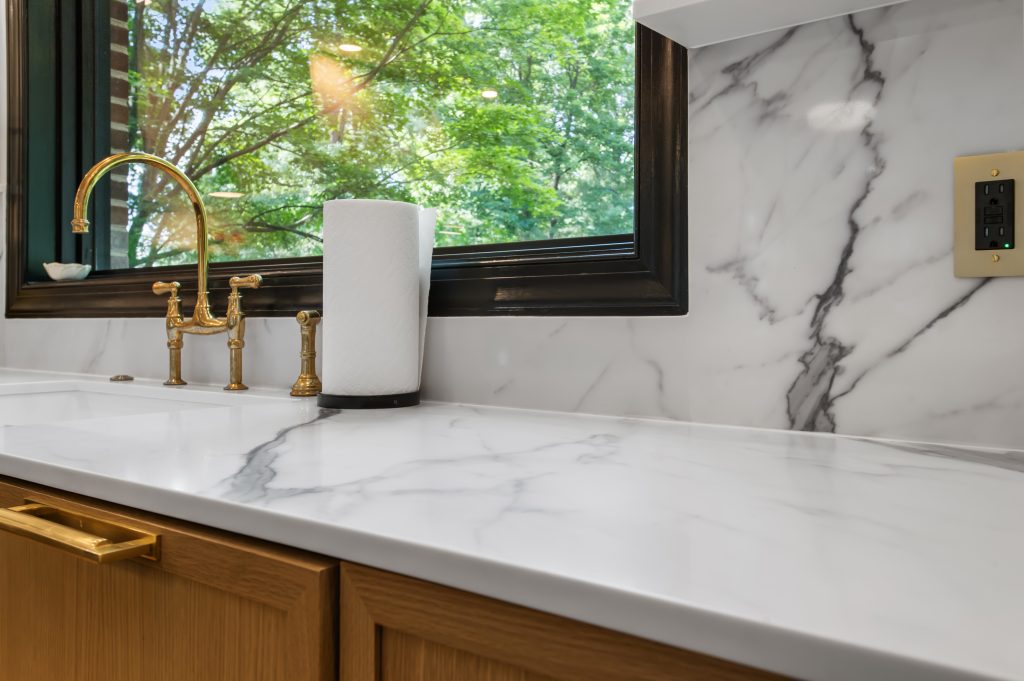
Polished marble is the image most people have in mind. It reflects light like a mirror. This makes the stone look very fancy. It also makes the colors inside the stone look deeper. The veins look sharper and more vibrant. This finish acts like a spotlight for the natural beauty of the rock.
Designers often use it in small spaces. The reflection helps a small room feel larger. It adds a sense of luxury to entryways. You will often see it in high-end hotels. It creates a very clean and bright atmosphere. The surface feels completely smooth against your hand. It does not hold onto dust easily. This makes it a popular choice for fireplace surrounds.
The Relaxed Vibe of Honed Marble
Honed marble has a satin or matte appearance. It does not reflect light. Instead, it absorbs the light. This gives the room a softer glow. It feels more organic and natural. The surface has a velvety texture when you touch it. It feels very grounded.
This finish works well in casual spaces. It fits perfectly in a busy family kitchen. It hides dust better than glossy surfaces. The look is more subtle. It does not scream for attention. It blends in with other materials nicely. You might see this in modern farmhouses.
It also looks great in old-world style homes. The colors appear a bit lighter. The grey veins might look softer compared to a shiny surface.
How to Clean and Maintain Each
Maintenance is a huge factor for homeowners. You want a stone that fits your cleaning habits. Consider these points before you buy:
- Polished marble needs frequent dusting. Dust particles show up clearly against the shine.
- Honed marble has open pores. It grabs onto colors and stains faster.
- You must seal honed marble more often. This stops liquids from soaking deep into the rock.
- Polished marble is slightly more stain-resistant. The pores are closed tightly from the buffing.
- Never use abrasive scrubbers on glossy stone. You will dull the beautiful shine immediately.
- Use a pH-neutral cleaner for both. Harsh chemicals damage the surface of any natural stone.
- Wipe up spills instantly on honed surfaces. This prevents dark spots from forming.
Honed vs Polished Marble: The Cost Difference
The price tag often drives the final decision. Generally, you will find that pricing is similar. However, there can be slight differences. Polished marble is the standard in the industry. It is very widely available. This can sometimes make it slightly cheaper.
Honed marble requires a different stopping point in processing. Sometimes this is a special order. That can add to the cost. The rarity of a specific slab matters more than the finish. A rare Italian stone will cost a lot in either finish.
You also have to think about long-term costs. Refinishing a dull polished floor costs money. Sealing a honed floor frequently adds up to the cost. In the debate of honed vs polished marble, the installation cost is usually the same.
Key Differences in Durability
You need to know how these surfaces handle daily life. One shows wear and tear more than the other. Here is a breakdown of durability factors:
- Scratches are less visible on matte surfaces. The lack of shine helps hide small marks.
- Glossy surfaces show scratches easily. The light hits the scratch and highlights it.
- Acid etches both types of stone. Lemon juice or vinegar will leave a dull spot on marble.
- Etch marks blend in better on honed stone. The dull spot matches the matte finish.
- Etch marks stand out on polished stone. The dull spot breaks up the shiny reflection.
- Heavy foot traffic wears down a glossy finish. You will create traffic patterns over time.
- Matte finishes keep their look longer in busy areas. The texture is already consistent.
 Get Your Free Countertop Consultation
Which One Is Better?
Your lifestyle plays a huge role here. Think about who lives in your house and how each resident uses the space. A couple with no kids might love the glossy look. They can keep it perfect easily. In contrast, a family with three dogs might hate it because they would see paw prints everywhere.
Look at your lighting too. A room with little natural light benefits from glossy stone. It bounces the light around. A room with huge windows might be too bright with glossy floors. The glare could be annoying. Matte stone absorbs that strong sunlight. It creates a calm feeling. You must balance the practical needs with your style wants. Do not just pick what looks pretty in the showroom.
Safety and Slippage Concerns
Safety is important for flooring. This is true for bathrooms and foyers. Here is how the two finishes compare for traction:
- Polished marble gets very slippery. Water makes it dangerous to walk on.
- Honed marble provides a better grip. The matte texture offers resistance for your feet.
- Avoid glossy stone for shower floors. It is a major slip hazard when wet.
- Use polished stone for walls instead. It looks beautiful on shower walls without the risk.
- Matte finishes are safer for bathroom floors. You are less likely to slip after a bath.
- Consider honed stone for pool decks. It is safer for children to run around.
- Use non-slip rugs on polished hallways. This helps prevent falls in high-traffic zones.
Making the Right Choice for Your Home
We hope this guide helps you decide. You now understand the look and feel of each. You know how they handle scratches. You also know which one is slippery. It all comes down to your personal taste. You also must consider your tolerance for maintenance.
There is no wrong answer here. Both options add value to your home. They both bring natural beauty inside. The debate of honed vs polished marble ends with what makes you happy. Let Cosmos Marble and Granite help you see which one speaks to you.
Honed and polished marble each bring unique beauty to your home—your choice depends on your style and how you use the space. If you need help deciding, Cosmos Marble & Granite in Huntingdon Valley proudly guides Metro Philadelphia homeowners toward the perfect finish.
Have questions or ready to start your project? Contact us today.
Get Your Free Countertop ConsultationFrequently Asked Questions
1. Does honed marble stain more easily than polished marble?
Yes, it does. The pores are more open on honed marble. This allows liquids like wine or coffee to soak in faster. You must seal it regularly.
2. Can I change polished marble to honed later?
Yes, a professional can do this. They will grind the surface down to remove the shine. It is a messy and expensive job, but it is possible.
3. Which finish is better for a kitchen countertop?
Honed is usually better for kitchens. It hides the etching from acidic foods like lemons. Polished marble will show dull spots from acid very clearly.
4. How often do I need to seal my marble?
Seal honed marble every few months. Seal polished marble once a year. Always test with a drop of water to see if it soaks in.
5. Does polished marble scratch easily?
The stone is hard, but the finish scratches easily. Sand and dirt act like sandpaper. These micro-scratches dull the shine over time.